In China’s fast-moving construction, manufacturing, and logistics sectors, lifting equipment performance depends on more than rated capacity. The central question is: what factors affect lifting equipment performance? Load weight, lifting frequency, ambient temperature, operator skill, maintenance quality, and power stability all matter. A 20-ton crane may perform reliably in a clean factory, yet struggle in a dusty steel plant with uneven floor conditions.
W. Edwards Deming, a leading industrial quality expert, said, “If you can’t describe what you are doing as a process, you don’t know what you’re doing.” This principle fits lifting operations closely. Performance should be assessed across the entire process, from equipment selection and installation to daily inspection and planned servicing. In practice, worn wire ropes, brake adjustment, poor lubrication, or overloaded hooks can reduce lifting accuracy before a visible failure appears.
Chinese operating conditions also deserve careful attention. Coastal humidity can accelerate corrosion. Northern winters can stiffen hydraulic seals. Busy warehouses may encourage rushed handling. These details are easy to overlook. They should not be.
This article examines the main technical, environmental, operational, and maintenance factors shaping lifting equipment performance in China. It also considers supplier quality, spare-parts availability, inspection records, and worker training. Not every performance problem comes from the machine itself. Sometimes, the real weakness is an incomplete process, unclear responsibility, or data that nobody reviews. There is room for reflection. Reliable lifting begins with evidence, not assumptions.
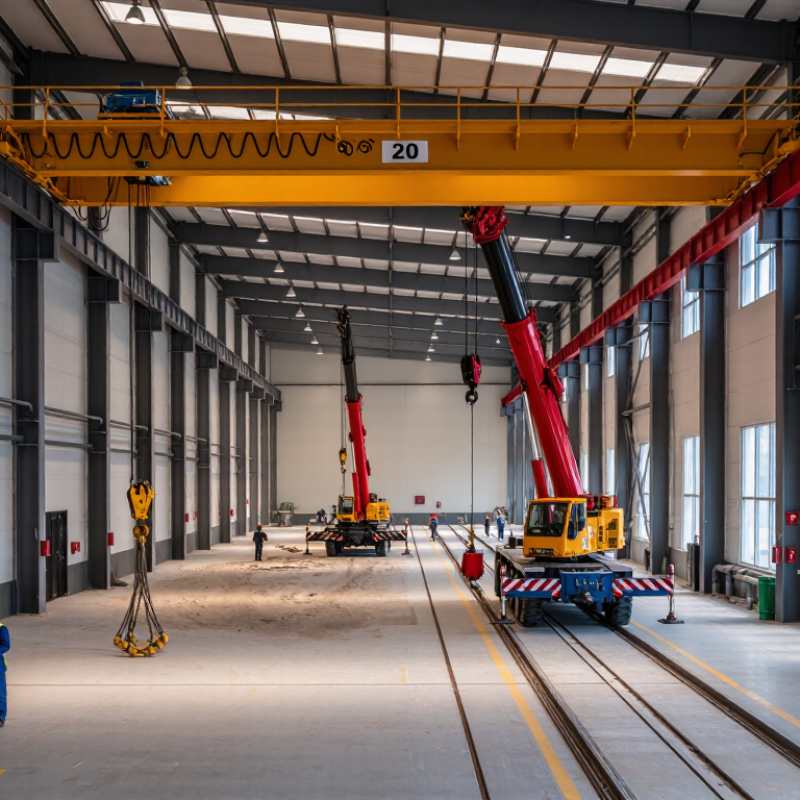
Lifting equipment in China serves factories, ports, warehouses, and construction sites. Overhead cranes move steel coils and machine parts across industrial workshops. Gantry cranes handle containers, concrete sections, and heavy materials in open yards. Tower cranes support high-rise construction where space remains limited. Mobile cranes work on changing sites, especially around bridges, roads, and wind-energy projects.
Electric hoists suit warehouses and maintenance areas with repeated vertical lifting. Forklifts move palletized goods through distribution centers, but narrow aisles require careful equipment selection. Scissor lifts and boom lifts help workers reach ceilings, façades, and mechanical systems. Each type performs differently under heat, dust, rain, and uneven ground. Coastal facilities often face salt corrosion, while northern projects may experience freezing temperatures. These conditions can affect brakes, controls, batteries, and steel structures.
Actual performance depends on more than rated capacity. Operators must match the load, lifting height, travel path, and duty cycle. A crane rated for ten tonnes may still perform poorly with unstable loads or frequent side pulling. Poor planning happens. Regular inspections should check wire ropes, hooks, limit switches, outriggers, and emergency stops. Local maintenance records also improve reliability because small defects become visible over time. In practice, training quality varies between sites, so supervisors should verify skills through observed tasks, not paperwork alone. Even experienced teams can overlook changing ground conditions after heavy rain.
Rated capacity varies by equipment configuration and operating conditions. Mobile cranes and gantry cranes generally support heavier loads, while tower cranes are widely used for construction projects requiring height and reach. Actual performance in China is also affected by load radius, lifting height, wind speed, duty cycle, operator skill, site conditions, inspection, and maintenance quality.
The figures represent typical mid-range rated capacities commonly specified for general industrial and construction applications; actual values depend on the equipment model and configuration.
Load capacity begins with accurate site information. Engineers must consider rated loads, impact forces, lifting frequency, and uneven weight distribution. A crane lifting steel coils faces different stress from one handling packaged goods. Wind, temperature, dust, and limited floor space also affect safe performance. The declared capacity should never replace a project-specific assessment. Small mistakes matter.
Design quality controls how equipment behaves under repeated loading. Strong frames, correctly sized welds, and stable control systems reduce structural fatigue. In China, equipment may operate in coastal ports, dusty workshops, or crowded construction areas. Each setting demands different protection and maintenance access. A clean paint finish can mislead. Internal alignment and material quality matter more.
Mechanical reliability depends on brakes, ropes, gears, bearings, and electrical protections working together. Regular inspections should record unusual vibration, oil leakage, rope wear, and brake response. A gearbox may sound normal today but fail after months of neglected lubrication. Replacement parts should match the original engineering requirements. Technicians also need clear training and practical inspection checklists. A common weakness is treating maintenance as paperwork. Actual observations should guide repairs, and inspection records should be reviewed when performance changes.
Lifting equipment performance in China depends heavily on maintenance discipline, inspection quality, and spare parts availability. On busy construction sites, dust can enter brake assemblies, while moisture accelerates electrical corrosion. Small defects then become unstable lifting, unusual noise, or sudden downtime. The U.S. Department of Energy’s Operations & Maintenance Best Practices Guide estimates that preventive maintenance can reduce costs by 12–18% compared with reactive work. This finding applies beyond factories, but local operating conditions still require careful judgment.
Inspection routines should follow equipment risk, usage hours, and China’s applicable standards, including GB/T 5972 for wire-rope examination. Operators should record rope deformation, hook opening, brake response, limit-switch function, and oil leakage. Keep it visible. ISO 9927 also supports structured crane inspections. Yet a signed checklist is not proof of a healthy machine. In practice, records may be completed too quickly, especially during production pressure. That weakness deserves review.
Spare parts planning is equally practical. Critical items include brake linings, contactors, fuses, wire ropes, hooks, and limit switches. The U.S. DOE guide links better maintenance planning with lower failure risk, but it does not solve delayed local procurement. Warehouses should track lead time, shelf life, compatibility, and minimum stock levels. A cheaper substitute may fit physically but perform poorly under heat, dust, or repeated loads. Field teams should test replacement parts before returning equipment to service, and record the result for future inspections.
On Chinese construction sites, lifting performance often begins with the operator. A rated crane can still move unpredictably when controls are rushed or signals are unclear. Operators need practical training in load balance, wind conditions, blind spots, and emergency stopping. They should understand the equipment manual and applicable Chinese safety requirements. Paper certificates are not enough. Supervisors can observe real lifting tasks and correct unsafe habits immediately.
Worksite management also affects every lift. Before operation, the team should confirm ground stability, lifting routes, weather, and overhead obstacles. A spotter must remain visible and use agreed hand signals or radio commands. Workers should stay outside the suspended-load exclusion zone. Inspection records need accurate details, including wire-rope wear, hook-latch condition, brakes, and warning devices. A checklist can be signed too quickly; that weakness deserves review.
Safety procedures work best when they are specific to the site. Each lift should have a clear load weight, lifting method, communication plan, and stop-work rule. Daily briefings should address changing conditions, not repeat empty phrases. Even experienced teams make mistakes. A worker may notice a damaged sling but remain silent because production is behind schedule. Managers must welcome that report and pause the lift without blame. No system is perfect. Regular drills, independent inspections, and honest incident reviews can reveal problems before a small error becomes a serious failure.
Climate strongly affects lifting equipment performance across China. Coastal sites expose steel parts to salt air, humidity, and faster corrosion. Northern winters can stiffen hydraulic seals and reduce battery efficiency. In hot regions, cooling systems may struggle during long lifting cycles. Dust is another concern. Fine particles can enter filters, joints, and control cabinets.
Terrain changes both stability and productivity. Mountain projects may require compact equipment, wider support areas, and careful route planning. Soft ground near construction zones can sink beneath outriggers after heavy rain. Engineers should verify ground-bearing capacity before positioning a machine. A small slope can create a serious load-angle problem. Field teams sometimes underestimate this detail.
Regulations require documented inspections, trained operators, and accurate load information. Local requirements may differ by project location, so records must remain current and accessible. Supply chain conditions also influence reliability. Delayed hydraulic hoses, sensors, or structural components can stop work for days. Keeping critical spares nearby reduces downtime, although excessive inventory increases cost. In practice, delivery estimates are not always accurate. Weather, customs procedures, and inland transport can change them quickly. Maintenance planning should reflect these uncertainties, not ideal schedules.
Overhead cranes move steel coils and machine parts inside factories. Gantry cranes handle containers and concrete sections in open yards. Tower cranes support high-rise construction. Mobile cranes serve changing road, bridge, and energy projects.
Electric hoists suit warehouses and maintenance areas with repeated vertical lifting. They work well where lifting paths remain consistent. Operators should still check load weight, height, and lifting frequency.
No. Forklifts move palletized goods efficiently through distribution centers. Narrow aisles require careful equipment selection and slower travel. A poor fit can cause delays, contact damage, or awkward turning.
Coastal salt air can accelerate steel corrosion. Northern freezing temperatures may stiffen hydraulic seals and reduce battery efficiency. Heat can strain cooling systems during long cycles. Dust may enter filters, joints, and control cabinets.
Teams should verify ground-bearing capacity, slope, drainage, and recent rain. Soft ground can sink beneath outriggers. Even a small slope can change the load angle. This detail is easy to underestimate.
They should check wire ropes, hooks, latches, brakes, limit switches, outriggers, and emergency stops. The load weight and balance also need confirmation. A signed checklist alone may not reveal everything.
Operators must manage blind spots, wind, load balance, signals, and emergency stopping. Supervisors should observe real tasks instead of checking paperwork alone. Certificates help, but they are not enough.
Use one agreed signal system, such as visible hand signals or radio commands. Keep a spotter visible near the lifting route. Workers must stay outside the suspended-load exclusion zone. Confusion happens.
Keep inspection records with specific details and repair small defects early. Store critical hoses, sensors, and structural parts nearby when practical. Delivery estimates can change because of weather, customs, or inland transport. Extra inventory also costs money, so the balance deserves review.
Understanding what factors affect lifting equipment performance is essential for safe, efficient, and reliable operations in China. Different equipment types, including cranes, hoists, forklifts, and lifting platforms, are selected according to specific load-handling tasks and working environments. Performance depends heavily on rated load capacity, structural design, manufacturing quality, and the reliability of mechanical, hydraulic, and electrical systems. Equipment that is properly matched to its application can reduce operational risks and improve productivity.
Regular maintenance, timely inspections, and access to suitable spare parts also play a major role in extending service life and preventing unexpected failures. Skilled operators must follow safety procedures, communicate clearly, and manage loads carefully, while worksite planning should address traffic flow, ground conditions, and emergency response. In addition, China’s climate, terrain, regulatory requirements, and supply chain conditions can influence equipment selection, daily performance, and maintenance efficiency. Together, these factors determine whether lifting equipment operates safely and consistently.

Liftara Lift